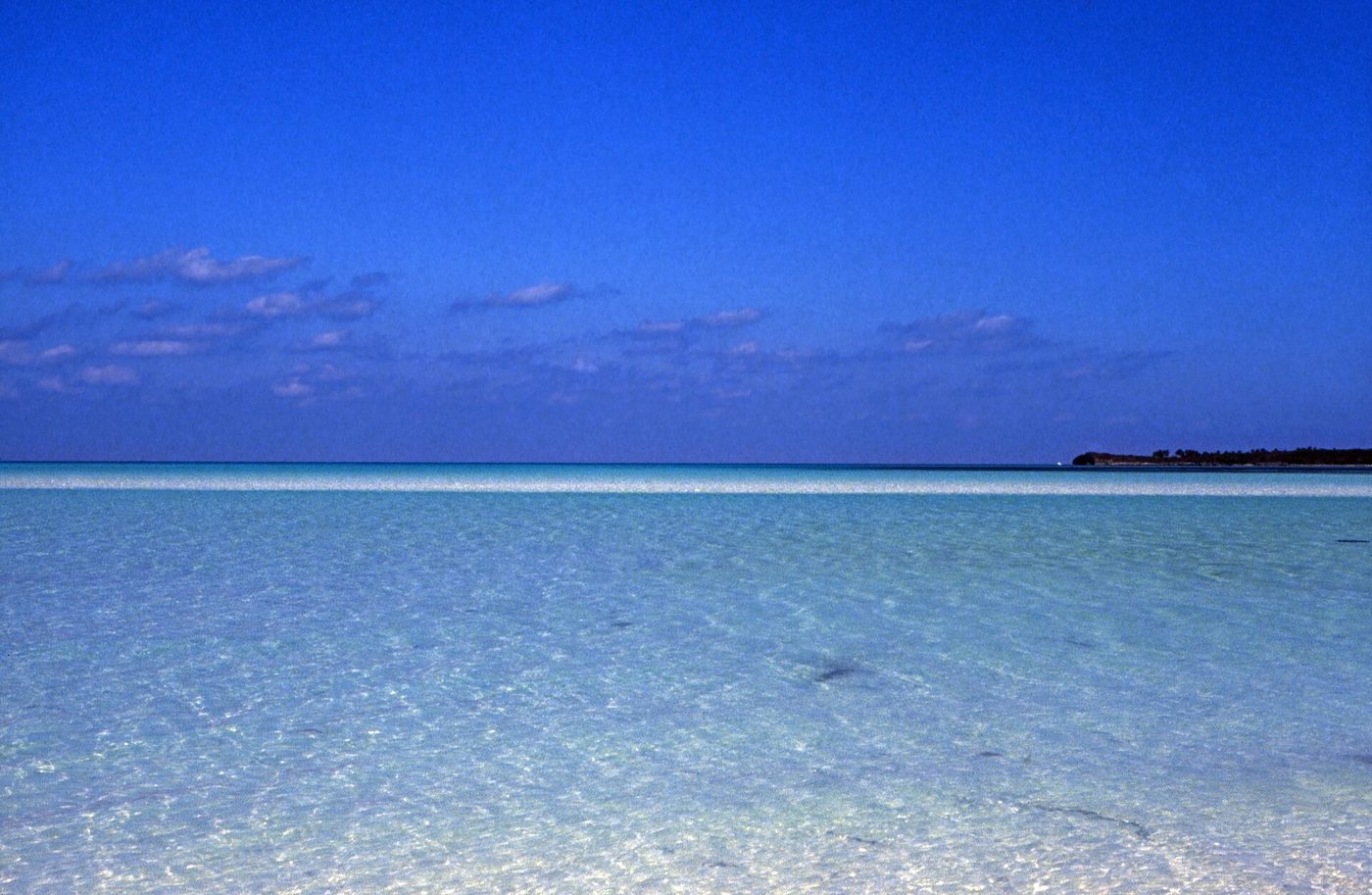
The flatsSand and turtle grass, ankle to knee deep. Sight-fishing.
Reef & bottomCoral heads, ledges and drop-offs, 15 to 200 feet.
OffshorePast the drop, into the blue. Trolling water.
Bonefish
4–6 lb, with 8 lb+ trophies
The ghost of the flats — Eleuthera's signature gamefish. Fast, spooky, and everywhere on the island's sand and turtle-grass flats.
- Where
- Oceanside and bayside sand flats, creek mouths and mangrove edges on a flooding tide.
- Best tide
- Incoming tide, first two hours — fish push onto the flat to feed. Early light beats midday glare.
- How
- Sight-fish: lead the fish 6–8 ft, let the fly land soft, strip-strike low and slow, then let it run.
- Peak
- Jan, Feb, Mar, Apr, May, Jun, Oct, Nov, Dec
- Legal
- Flats fishing license required (age 12+). Bonefish may not be bought or sold in the Bahamas — release is the rule of the flats.
Gotcha flyCrazy CharlieLive shrimpSmall skimmer jig
From the dockCloud kills sight-fishing — on grey days work the creek mouths on the falling tide instead.
The flats' toughest customer — bigger, warier, and pickier than a bonefish. Landing one on Eleuthera is a badge.
- Where
- Deeper flat edges, channel drop-offs, and rays' mud trails on warm months.
- Best tide
- Warm incoming water over the flat edge, especially midday spring tides.
- How
- One good crab presentation beats fifty casts — drop it in the window and let it sink; strike only when the line moves.
- Peak
- Mar, Apr, May, Jun, Jul, Aug
- Legal
- Flats fishing license required (age 12+). Released by practice.
Live crabCrab fly (Merkin)Shrimp fly
From the dockFollow a feeding stingray — permit shadow rays to pick off what they stir up.
The silver king. Not thick on Eleuthera like Andros, but resident fish haunt the creeks and channels — and they jump like nothing else.
- Where
- Creek systems, channels, and harbour mouths at first and last light.
- Best tide
- Moving water either way — tarpon stack where the creek drains.
- How
- Cast across the lane, slow steady strip; bow to the fish on every jump or the hook comes back.
- Peak
- Apr, May, Jun, Jul, Aug, Sep, Oct
- Legal
- Catch and release only — tarpon are protected gamefish.
Toad flySwimbaitLive mullet
From the dockNight tides around lit docks can hold rolling fish — listen for the gulp.
The iconic Bahamian reef fish and the taste of the islands — under strict seasonal protection so it stays that way.
Closed seasonJanuary, February, December — no harvest, release immediately.
- Where
- Coral heads, ledges and blue-hole mouths from 20 to 120 ft.
- Best tide
- Slack current around tide change — grouper hold tight to structure when it runs hard.
- How
- Drop baits tight to the reef; first ten seconds decide it — turn the fish before it reaches its hole.
- Peak
- Mar, Apr, May, Jun, Jul, Aug, Sep, Oct, Nov
- Legal
- CLOSED SEASON Dec 1 – Feb 28 (spawning): no harvest — release immediately. Rest of year counts toward the 60 lb / 20 demersal fish vessel limit.
Live pilchardDead sardineBucktail jigDeep diving plug
From the dockA grouper that gets into its hole has won — lock the drag and lift from the first crank.
Sharp-eyed, hard-pulling and excellent eating — the thinking angler's snapper.
- Where
- Sand channels between reefs, drop-off edges, and deeper flats late in the tide.
- Best tide
- Falling tide over channels near the reef.
- How
- Long fluorocarbon leader, light lead, natural drift — muttons refuse anything that looks wrong.
- Peak
- Apr, May, Jun, Jul, Aug
- Legal
- Counts toward the 60 lb / 20 demersal fish vessel limit.
Live pilchardFresh conchJig with strip bait
From the dockChum lightly and wait — the big one arrives after the small ones get brave.
Yellowtail Snapper
1–3 lb
The reef's reliable fun — quick, pretty, and perfect for a family half-day with dinner at the end of it.
- Where
- Patch reefs and coral heads in 15–60 ft, usually in loose schools above the structure.
- Best tide
- Any moving water; they feed high in the column.
- How
- Light line, small hooks, slow-sinking chum bits — match your bait to the drift of the chum.
- Peak
- Jan, Feb, Mar, Apr, May, Jun, Jul, Aug, Sep, Oct, Nov, Dec
- Legal
- Counts toward the 60 lb / 20 demersal fish vessel limit.
Small jigCut baitShrimp
From the dockIf the school sinks away, go quieter: smaller hook, longer leader, no lead.
Toothy, explosive, and always watching. Winter flats cudas offer some of the most violent strikes in the islands.
- Where
- Reef edges year-round; prowling the flats in cooler winter months.
- Best tide
- Incoming tide on the flats in winter; any tide on the reef.
- How
- Rip the tube lure flat-out — a barracuda ignores anything slow. Wire leader, always.
- Peak
- Jan, Feb, Mar, Apr, May, Jun, Jul, Aug, Sep, Oct, Nov, Dec
- Legal
- Hook & line only, as with all Bahamas sportfishing.
Tube lureSurface plugLive bait
From the dockLocal practice: larger reef barracuda are released — ciguatera risk rises with size.
Mahi-Mahi (Dorado)
10–30 lb
Neon-green acrobatics and the best fish tacos of your life. Spring blue water off Eleuthera lights up with them.
- Where
- Offshore weed lines, current edges and floating debris in deep water.
- Best tide
- Dawn troll along the colour change.
- How
- Troll ballyhoo down the weed line; when one hooks up, leave it in the water — the school stays with it.
- Peak
- Mar, Apr, May, Jun
- Legal
- Vessel limit: 18 pelagics total (mahi, wahoo, kingfish, tuna combined).
Rigged ballyhooTrolling lureCasting jig
From the dockFind birds working bait and you've found the school — cast, don't troll through it.
Winter's freight train — the fastest strike in the ocean, and Eleuthera's cool-season headliner.
- Where
- Drop-offs and ledges just off the reef wall, 100–400 ft of water.
- Best tide
- Strong moving current along the ledge, early morning.
- How
- High-speed troll 12–15 kt with wire leader; stagger lures short and deep.
- Peak
- Jan, Feb, Mar, Nov, Dec
- Legal
- Vessel limit: 18 pelagics total (combined).
High-speed lureRigged ballyhoo with skirtDeep plug
From the dockFull moon weeks fish better for winter wahoo — plan the charter around it.
Deep-water muscle. Summer schools push through the sound and the drop — bring your legs.
- Where
- Blue water over the deep drop; often under working birds with skipjack.
- Best tide
- First light and last light over the drop.
- How
- Troll feathers till you mark them, then chunk or cast poppers into the school.
- Peak
- May, Jun, Jul, Aug, Sep
- Legal
- Vessel limit: 18 pelagics total (combined).
Trolling featherCedar plugLive pilchardPopper
From the dockWhen tuna get boat-shy, go smaller and longer: light leader, small chunks, patience.
The one you tell stories about. Summer in the deep off Eleuthera is marlin water.
- Where
- The deep ocean past the drop — a thousand feet and more.
- Best tide
- Midsummer, midday heat, lazy swells — classic raise conditions.
- How
- Troll a full spread with teasers; when the bill shows, drop back and let it eat before you strike.
- Peak
- Jun, Jul, Aug
- Legal
- Billfish are released by Bahamian sporting practice — circle hooks make it clean.
Large trolling lureRigged ballyhooTeaser spread
From the dockKeep a pitch bait rigged and ready — a marlin raised on a teaser wants an easy meal.
King Mackerel (Kingfish)
15–35 lb
Wahoo's smaller cousin — smoker kings patrol the same winter ledges and hit nearly as hard.
- Where
- Reef edges and ledges in 60–200 ft during the cooler months.
- Best tide
- Moving tide along the ledge, dawn and dusk.
- How
- Slow-troll live baits with a stinger hook — kings strike short.
- Peak
- Jan, Feb, Mar, Apr, Nov, Dec
- Legal
- Vessel limit: 18 pelagics total (combined).
Live pilchardDrone spoonRigged ballyhoo
From the dockA long silver flash behind the bait that doesn't eat? Speed up, then stop — the pause triggers the strike.